Discover latest tips, box design trends, eco-friendly strategies, and expert advice to elevate your brand packaging.
The 2026 market for Custom Soap Boxes is becoming more competitive, visual, and sustainability-focused. Soap brands now expect packaging suppliers to deliver more than attractive prints. They need accurate sizing, strong board, reliable color control, and practical delivery schedules. A box may look beautiful online, yet fail when exposed to humidity, transport pressure, or repeated handling.
Paul Rand, a respected identity and packaging designer, said, “Design is the silent ambassador of your brand.” His observation remains valuable for soap packaging. A well-made box can communicate cleanliness, craftsmanship, and trust before customers open it. However, design alone cannot identify the best supplier. Material sourcing, production experience, structural testing, printing quality, and customer support also deserve close attention.
This guide examines leading Custom Soap Boxes suppliers worldwide for 2026. It considers their customization options, minimum order quantities, finishes, turnaround times, and environmental practices. It also looks at details that are easy to overlook, such as folding accuracy, insert stability, barcode readability, and packaging protection during shipment.
Some supplier claims may sound impressive. Not every claim deserves equal confidence. Buyers should request samples, confirm specifications, and compare real production evidence. That extra step can reveal uneven edges or disappointing colors. It may feel slow, but it prevents expensive mistakes.
The final selection is not a universal ranking. A boutique soap maker may value low minimum quantities, while a large retailer may prioritize automation and volume consistency. This comparison offers practical guidance, though supplier conditions can change. Careful verification remains essential.
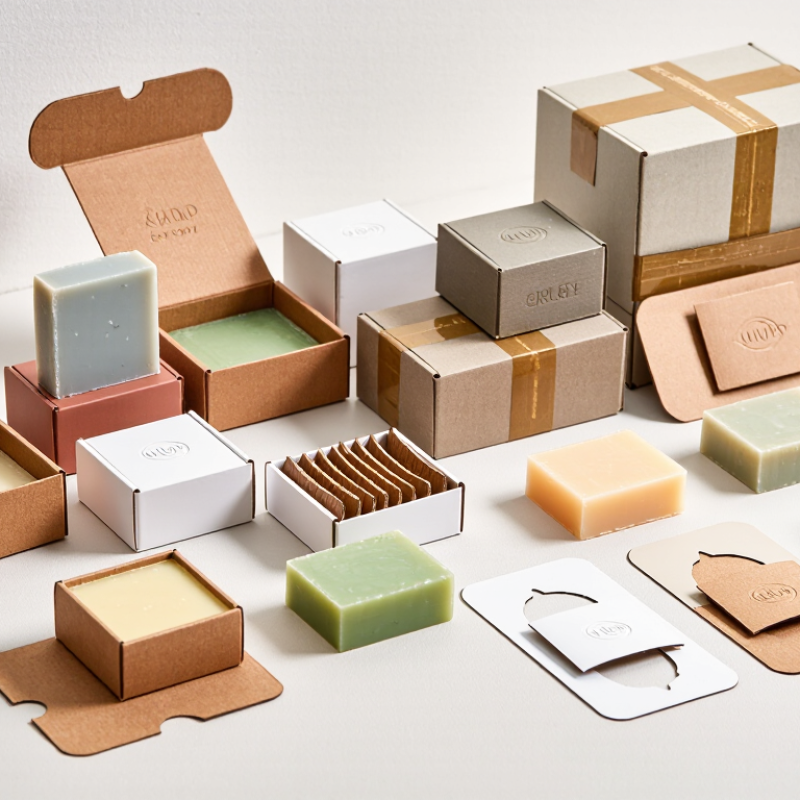
Custom soap boxes are made-to-order packages designed around a soap bar’s size, shape, and presentation needs. They may use folding carton board, kraft paper, or recycled paper materials. The design can include product details, usage guidance, ingredients, batch information, and storage advice.
These boxes matter because packaging protects soap from dust, moisture, friction, and damaged edges during transport. A well-fitted structure can reduce movement inside the carton. That small detail often improves the customer’s first impression. Clear printing also helps buyers understand the product quickly. However, attractive graphics cannot repair weak packaging or confusing information.
Experienced packaging suppliers usually discuss material thickness, coating, closure style, printing accuracy, and production quantities before quoting. They may provide a physical sample for checking dimensions and color. This step is easy to skip, but it can prevent costly mistakes. I think many businesses focus too heavily on appearance. They sometimes forget that a wet bathroom environment tests the box differently from a retail shelf. For worldwide sourcing, buyers should review quality controls, communication speed, shipping terms, and documentation. A supplier’s portfolio is useful, but it is not proof of consistent production. Ask for recent samples. Test them. Reconsider the design when the box feels elegant but performs poorly.
| Evaluation Dimension | Common Industry Specification | Why It Matters for Soap Packaging | Typical Buyer Requirement | Recommended Verification Point |
|---|---|---|---|---|
| Definition | A custom soap box is a paperboard carton designed with a specific size, structure, artwork, finish, and closure system for a soap product. | It protects the bar, communicates product information, supports branding, and helps create a consistent retail presentation. | The internal dimensions should match the soap bar closely enough to reduce movement without making insertion difficult. | Request a physical prototype or a blank sample before approving mass production. |
| Primary Paperboard Types | Folding boxboard, solid bleached sulfate board, recycled paperboard, and kraft paperboard are commonly used for folding cartons. | Board composition affects stiffness, print appearance, surface smoothness, moisture resistance, and sustainability claims. | Use a smooth white board for high-resolution artwork or kraft/recycled board for a natural appearance. | Confirm board grade, basis weight or grammage, recycled content, and whether the board is suitable for the intended product environment. |
| Common Board Thickness | Many retail soap cartons use paperboard in an approximate range of 250–400 gsm, depending on box size and structure. | Higher grammage generally improves stiffness, while lighter stock can reduce material use and shipping weight. | Select the lightest board that still resists crushing, scuffing, and deformation during packing and transport. | Ask for a caliper or thickness measurement, not only a gsm description, because board construction varies. |
| Box Structures | Sleeve boxes, tuck-end cartons, reverse-tuck cartons, auto-bottom cartons, two-piece rigid boxes, and window cartons are common formats. | The structure influences assembly speed, shelf appearance, protection, material use, and packaging cost. | Choose tuck-end formats for efficient folding and rigid formats when premium presentation or added protection is required. | Test the locking tabs, glue points, opening experience, and fit with the filled soap bar. |
| Printing Methods | Offset lithographic printing is common for larger runs; digital printing is useful for shorter runs, prototypes, and variable artwork. | The selected process affects color consistency, setup cost, minimum order quantity, and production flexibility. | Use digital printing for market testing or multiple designs and offset printing for larger repeat orders. | Approve a color proof and define acceptable color tolerance before production. |
| Surface Finishes | Matte or gloss aqueous coating, matte or gloss film lamination, soft-touch coating, embossing, debossing, and metallic foil stamping are widely available options. | Finishes can improve visual appeal and scuff resistance, but some combinations may reduce recyclability or increase cost. | Use coating or lamination when the package will experience frequent handling, rubbing, or exposure to light moisture. | Confirm whether the finish is compatible with the buyer’s recycling requirements and local packaging rules. |
| Moisture Management | Paperboard is absorbent, so coating, lining, structural clearance, and dry storage conditions may be needed for soap products with residual moisture or oils. | Moisture can weaken board, cause warping, transfer ink, or damage printed surfaces. | Test packaging with the actual soap formula after curing and during expected storage conditions. | Request humidity, rub, and compression testing when the product is soft, oily, fresh, or shipped through humid climates. |
| Typical Minimum Order Quantity | Custom folding-carton orders commonly begin around several hundred to several thousand units, depending on printing process, tooling, and material. | Quantity affects unit price, setup allocation, inventory risk, and the practicality of testing several designs. | Ask for separate pricing at prototype, short-run, standard-run, and repeat-order quantities. | Confirm whether the minimum applies per size, per artwork, per colorway, or per total order. |
| Production Lead Time | A typical custom order may require approximately 2–6 weeks after artwork approval, with longer timing for complex finishes, tooling, or international shipping. | Lead time influences launch schedules, stock availability, and the need for safety inventory. | Obtain separate estimates for sampling, production, quality inspection, and transportation. | Make sure the quoted timeline starts after final artwork, proof approval, and payment—not from the first inquiry. |
| Artwork and Dielines | Production artwork is generally supplied as a vector-based PDF or equivalent file with bleed, cut lines, crease lines, safe areas, and embedded or outlined fonts. | Correct dielines reduce folding errors, misaligned graphics, unexpected text placement, and rework. | Use the supplier’s approved dieline and keep legal text away from creases, glue areas, and cut edges. | Approve a digital proof and, for important launches, a physical mock-up or pre-production sample. |
| Sustainability Indicators | Relevant indicators include responsibly sourced fiber, recycled content, right-sized construction, reduced plastic components, and recycling guidance. | Packaging choices affect material consumption, disposal options, environmental claims, and customer expectations. | Prefer fiber-based designs that avoid unnecessary mixed materials when local recycling systems accept them. | Request valid chain-of-custody or recycled-content documentation and check the rules of the target market. |
| Regulatory and Labeling Support | Depending on the market, soap packaging may need product identity, net quantity, ingredient information, responsible-party details, warnings, batch information, and barcode space. | Accurate packaging information supports legal compliance, traceability, retail acceptance, and consumer understanding. | Treat regulatory review as the buyer’s responsibility and use the supplier mainly for print and structural execution. | Review requirements for every destination country before artwork approval, because labeling rules vary by jurisdiction. |
| Quality Control | Useful checks include dimensions, board thickness, print registration, color consistency, die-cut accuracy, folding performance, glue strength, and quantity. | Consistent quality reduces assembly problems, customer complaints, product damage, and retailer rejection. | Define measurable acceptance criteria and an inspection procedure before production begins. | Use an approved reference sample and document tolerances for dimensions, color, and finishing. |
| International Logistics | Important variables include flat-packed volume, carton count, shipping mode, destination duties, transit time, and moisture protection during transport. | Soap boxes are lightweight but can occupy significant volume, making packaging efficiency important for landed cost. | Compare landed cost rather than unit price alone, including sampling, tooling, freight, duties, and inspection. | Confirm packed dimensions, shipping terms, export documents, and carton labeling requirements. |
| Overall Supplier Selection | The strongest supplier option is the one that balances structural capability, print quality, verified materials, realistic lead time, quality control, communication, and total cost. | A low quoted price cannot compensate for poor fit, unstable color, late delivery, or packaging that fails in real storage conditions. | Score suppliers using the same specification sheet and compare approved samples rather than relying only on online portfolios. | Request references or documented case evidence without treating unverified marketing claims as proof of capability. |
Note: Quantities, lead times, board specifications, finishes, and testing requirements are indicative industry ranges and can vary by order size, design complexity, destination market, and supplier equipment. Confirm all specifications with the selected packaging manufacturer before purchase.
They are made-to-order packages fitted to a soap bar’s size, shape, and presentation needs. They may use kraft paper, folding carton board, or recycled paper.
They protect soap from dust, moisture, friction, and damaged edges during transport. A snug fit reduces movement inside the box. That small detail matters.
Kraft paper creates a warm, natural appearance. Solid bleached board supports sharper colors and cleaner edges. Recycled paper can support sustainability goals, but its texture may affect fine artwork.
Common choices include tuck-end boxes, sleeves, drawer boxes, and inserts. A window can display the soap’s color and texture. However, it may weaken the structure.
CMYK printing suits detailed images and colorful artwork. Spot colors offer more controlled tones. Matte and gloss coatings change appearance and handling.
Embossing, foil accents, and debossing can create a premium tactile effect. Too much decoration may increase costs quickly. A beautiful design is not always practical.
Request physical samples and review the dieline carefully. Check dimensions, folds, color accuracy, closure strength, and printed information. Test the box before approval.
Store finished boxes, handle them repeatedly, and expose them to mild humidity. Check for weakened board, damaged folds, oil marks, and loose closures. The result may look imperfect. That is useful.
Packaging may include ingredients, usage guidance, storage advice, batch details, and product information. Different markets may require different information. Qualified review is wise.
Review recent physical samples, quality controls, communication speed, shipping terms, and documentation. Confirm minimum quantities and production timelines in writing. A portfolio helps, but it proves little alone.
Custom Soap Boxes are more than protective packaging; they are an important part of a soap brand’s presentation, product safety, and customer experience. A well-designed box can protect the soap from moisture, dust, and damage while communicating product quality through its structure, colors, typography, and finishing details. When evaluating suppliers worldwide, businesses should consider material quality, printing accuracy, customization capabilities, production capacity, pricing, communication, sample services, and delivery reliability.
Leading suppliers in 2026 are expected to offer flexible solutions using recyclable paperboard, kraft stock, rigid materials, and other suitable packaging options. Brands may choose from tuck-end boxes, sleeve designs, window packaging, embossed details, foil effects, matte or gloss finishes, and custom inserts. Selecting the right supplier requires comparing design support, material durability, minimum order quantities, quality control, turnaround times, and shipping arrangements. The best choice is a supplier that can consistently transform a brand’s packaging concept into attractive, functional, and dependable soap boxes.