Free Worldwide Shipping on All Orders
Free Custom Design Support Included
100% Price Match Guarantee
Eco-Friendly Packaging Materials Available
Packaging Knowledge Base & Insights

Custom Packaging Blog & Industry Guides

Discover latest tips, box design trends, eco-friendly strategies, and expert advice to elevate your brand packaging.
Custom packaging box designs and blog insights
0%

A burger can look perfect at the counter and arrive limp, cold, or leaking grease. The box matters. Custom Burger Boxes help restaurants protect food quality, carry a clear brand message, and make takeout feel considered. But the right choice depends on the menu, delivery time, and how each burger is assembled. There is no universal winner.

Packaging researcher Dr. Susan Selke’s work explores packaging materials and their performance. A practical principle for this guide, not a verified quotation from Dr. Selke, is: “A strong burger box protects the meal, manages grease, and makes the brand easy to remember.” It sounds simple. In practice, small details matter: a vent near the lid can release steam, while a snug base can keep a tall burger from sliding. A glossy finish may photograph well, yet show fingerprints. Trade-offs are real.

This guide compares seven custom burger box options for restaurants, from sturdy takeaway cartons to designs with windows and branded printing. We look at material, closure, ventilation, grease resistance, sizing, and everyday handling. Those details can affect texture, spills, storage, and the customer’s first impression. Not every feature earns its extra cost. Some boxes also perform differently with a double patty or a long delivery route. Choose with care—and test your actual menu before ordering in bulk. A sample run may reveal what a product description cannot.
7 Best Custom Burger Boxes for Restaurants

Key Features of Custom Burger Boxes for Restaurant Use

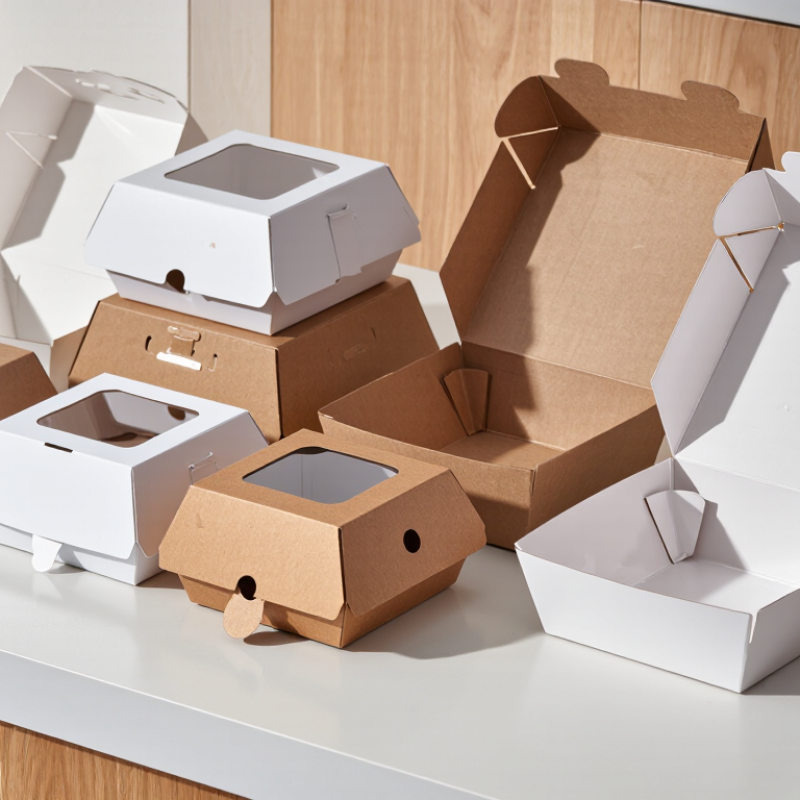
A custom burger box should protect the meal from kitchen pass to customer’s table. The right size keeps the bun from sliding without crushing lettuce or tall toppings. Food-contact-safe paperboard and a grease-resistant lining help prevent soft spots during takeaway service. Vent holes can release steam and keep fried edges crisp, but too many may let food cool quickly. That balance matters. A box designed for a thin cheeseburger may not suit a double patty with sauce and pickles.

Look for a closure that stays shut in a delivery bag yet opens without tearing. A stable base helps staff stack orders during a busy rush, while clear sizing options reduce packing mistakes. Custom printing can make the box easier to identify, but ink and coatings should be suitable for food packaging. Ask suppliers for material details rather than relying on vague sustainability claims. Test it cold. A practical trial with a hot burger, fries, and a short delivery ride can reveal leaks, trapped steam, or awkward opening. One detail is easy to overlook: a box that performs well on a counter may buckle when stacked.

Materials and Construction Options for Burger Packaging

A burger box must resist grease without trapping every trace of steam. Coated paperboard offers a smooth surface and crisp printing, while uncoated kraft has a natural look and can absorb moisture more readily. For juicy patties or takeaway journeys, ask suppliers about the barrier coating and its suitability for food contact. A greasy corner is a small problem until it reaches a customer’s hands.

Construction matters just as much as the sheet material. Folded paperboard boxes are light and stack neatly, but thin walls may soften under a heavy burger. Corrugated board adds rigidity and cushioning, though it takes more storage space. Check how the lid closes: secure tabs should hold during delivery without making the box awkward to open. That matters.

Vent holes can release steam and help keep buns from turning soggy. Too many, however, may cool the meal quickly. The right balance depends on patty size, toppings, and delivery time. Test a filled box after a realistic wait, not just on an empty counter. Look for softened corners, sauce leaks, and lids that press against toppings. I would not assume one box works for every menu; even a well-made design can disappoint when the portion changes. Ask for samples, then test them during a busy service.

Seven Custom Burger Box Styles for Different Restaurant Needs

Seven custom burger box styles can solve very different service problems. USDA estimates that 30–40% of the U.S. food supply is lost or wasted. That figure covers the food system broadly, not burger packaging alone, but it highlights why protecting a meal matters. A box should fit the burger, hold its shape, and travel well. Small details count.

A hinged clamshell opens quickly at a busy counter. A tuck-top carton stacks neatly for delivery shelves. A vented box lets steam escape, helping buns stay less soggy. A sleeve-and-tray style keeps the base stable while customers hold the burger. Fit matters. Measure the burger with its tallest toppings, not just its bun.

For loaded burgers, a compartmented box can separate fries or keep sauce cups upright. A grease-resistant carton helps limit oily marks on hands and bags. A rigid premium-style box offers more protection for tall builds, though it uses more material and may cost more. That trade-off deserves a real test. The National Restaurant Association’s 2024 State of the Restaurant Industry report describes takeout and delivery as important parts of restaurant service; packaging must therefore work beyond the dining room. Test each style with a hot burger, a short drive, and a few minutes on a counter. One design will not suit every menu.

7 Custom Burger Box Styles for Different Restaurant Needs

Illustrative fit ratings for common restaurant priorities

Scores are an editorial 1–5 comparison of how well each box style’s typical features suit its listed use—not supplier test results. Actual performance depends on materials, dimensions, ventilation, and the burger.

How to Compare Box Sizes, Branding, and Sustainability

Start with the burger, not the catalog. Measure the assembled sandwich, including tall toppings, then allow room for a quick handoff without crushing the bun. Compare internal dimensions, not just outside measurements. A snug box limits sliding; an oversized one can waste storage space and make a single burger look lost. Test several sizes with hot, freshly wrapped orders. Steam changes the fit.

Branding should stay clear when the lid is greasy or stacked under another box. A small logo and readable color contrast may work better than busy graphics. Sustainability also needs a practical check. The US Environmental Protection Agency’s 2018 Advancing Sustainable Materials Management report estimated that containers and packaging generated 82.2 million tons of municipal solid waste. That figure covers many packaging types, not burger boxes alone. Still, it shows why material choice matters. Ask suppliers about recycled content, coatings, and whether local facilities accept the finished box. “Recyclable” on its own is not a guarantee.

Tips: Test boxes with your actual menu and delivery route. Check whether fries soften the base, lids stay shut, and printed areas resist smearing. Compare storage space per 100 boxes, too. A lighter box may seem ideal, but if it leaks grease, staff may double-wrap orders. That trade-off is easy to miss.

Choosing the Right Custom Burger Box for Your Menu

Choosing the right custom burger box starts with the burger, not the artwork. A single smash burger needs a snug box that limits sliding, while a tall double stack needs extra headroom. Measure the bun, toppings, and paper wrap together. Small details matter.

Grease resistance is essential for juicy patties, but a fully sealed box can trap steam and soften the bun. Look for food-contact-safe materials and ask how the box handles heat, oil, and moisture. For fries served inside, ventilation may help preserve crispness.

Test it hot. Pack a real menu item, wait ten minutes, then check the bun, seams, and bottom panel. A beautiful sample may behave differently after a busy delivery ride.

Consider service speed and storage, too. Boxes that fold quickly and stack evenly can make a cramped prep area easier to manage. Custom printing should remain readable against grease marks and warm colors. Recycled or recyclable options may suit your goals, but confirm local acceptance and available coatings before ordering.

I would not choose by price alone; a low-cost box that leaks can waste food and frustrate customers. Still, the most durable option may be unnecessary for a small, lightly sauced burger. Match the box to how your kitchen actually serves it. A little trial and error is normal.

FAQS

Which material works better for a juicy burger?

Coated paperboard can resist grease, while uncoated kraft may absorb moisture more readily. Ask about the coating and food-contact suitability. A greasy corner matters.

Are folded paperboard boxes strong enough?

They are light and stack neatly, but thin walls may soften under a heavy burger. Corrugated board adds cushioning and rigidity, though it needs more storage space.

How many vent holes should a burger box have?

Vent holes release steam and can help keep buns from turning soggy. Too many may cool the meal quickly. Test it hot.

How can I choose the right box size?

Measure the assembled burger, including tall toppings. Compare inside dimensions, then test a snug fit that does not crush the bun. Steam changes the fit.

What should I check during a packaging test?

Fill the box and wait as long as a real delivery takes. Look for softened corners, sauce leaks, and a lid pressing on toppings. I still miss small leaks sometimes.

How can packaging graphics stay readable?

Use clear contrast and simple graphics. Check whether printed areas smear when the lid is greasy or stacked under another box. Keep it readable.

Does “recyclable” mean a box will be recycled?

Not necessarily. Ask about recycled content, coatings, and whether local facilities accept the finished box. The label alone is not a guarantee.

What else should I compare before choosing boxes?

Test them with your actual menu and delivery route. Check whether fries soften the base, lids stay shut, and storage space works for 100 boxes. Double-wrapping can cancel out a lighter box’s benefit.

Conclusion

Custom Burger Boxes help restaurants serve burgers neatly while protecting their shape, warmth, and presentation during dine-in, takeaway, and delivery. The right box should be sturdy, easy to assemble, comfortable to carry, and suited to the burger’s size and toppings. Restaurants can compare materials and construction options, including different paperboard weights, coatings, ventilation features, and closures, to find packaging that balances food protection with practical handling.

Seven box styles can meet different menu and service needs, from compact options for single burgers to roomier designs for stacked or generously filled meals. When comparing choices, consider fit, branding space, storage, cost, and sustainability. A well-matched size helps reduce movement and excess packaging, while clear design details can make orders easier to identify. By weighing these factors against its menu and service routines, a restaurant can choose burger packaging that supports a consistent, convenient customer experience.


Olivia

Olivia

Olivia is a professional marketing specialist dedicated to helping businesses understand how thoughtful products and practical solutions can create measurable value. With extensive knowledge of the company’s offerings, she regularly researches industry trends, customer needs, and emerging......