Free Worldwide Shipping on All Orders
Free Custom Design Support Included
100% Price Match Guarantee
Eco-Friendly Packaging Materials Available
Packaging Knowledge Base & Insights

Custom Packaging Blog & Industry Guides

Discover latest tips, box design trends, eco-friendly strategies, and expert advice to elevate your brand packaging.
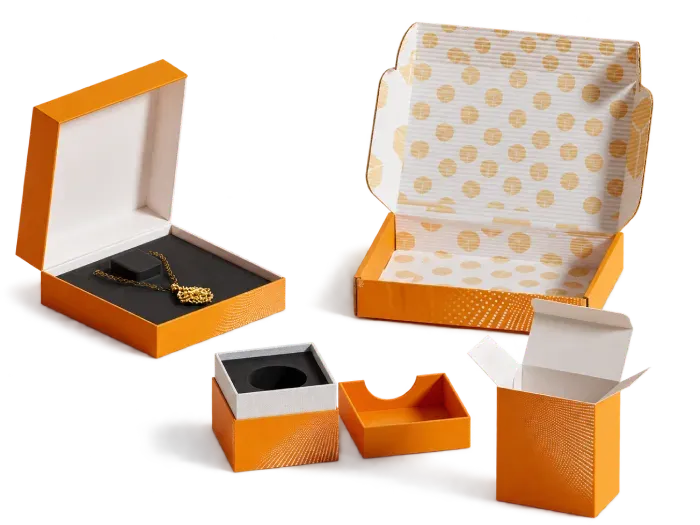
Custom packaging box designs and blog insights
0%

Choosing the right Custom Food Packaging Boxes is rarely a simple design exercise. Global buyers must balance product protection, shelf appeal, shipping costs, and local packaging expectations. A beautiful box can still fail if moisture reaches the food. Or if the structure collapses during a long ocean journey.

Packaging consultant Lisa McTigue Pierce has emphasized that packaging must protect the product before it promotes the brand. That principle remains practical for international food businesses. A bakery may need grease-resistant paperboard, while frozen meals require stronger barriers and reliable sealing. Dry snacks may prioritize resealable openings and lightweight construction. Small details matter. Box depth matters. So does the adhesive.

This guide examines seven strong Custom Food Packaging Boxes options for global buyers. It considers folding cartons, rigid boxes, corrugated mailer boxes, window boxes, tuck-end designs, sleeve-and-tray packaging, and eco-conscious fiber formats. Each option offers different advantages. None is perfect.

Material selection should reflect the food, climate, transport route, and customer experience. Buyers should also confirm applicable food-contact requirements, labeling rules, recycling guidance, and supplier quality controls before ordering. These requirements can vary between markets, and assumptions create expensive mistakes.

The strongest packaging choice is not always the most luxurious one. Sometimes, a modest box with accurate dimensions performs better. Sometimes, premium finishes add value but reduce recyclability. That tension deserves honest attention. By comparing performance, appearance, customization, and practical limitations, global buyers can make more reliable packaging decisions. The goal is not merely to impress customers. It is to deliver food safely, consistently, and with fewer avoidable surprises.
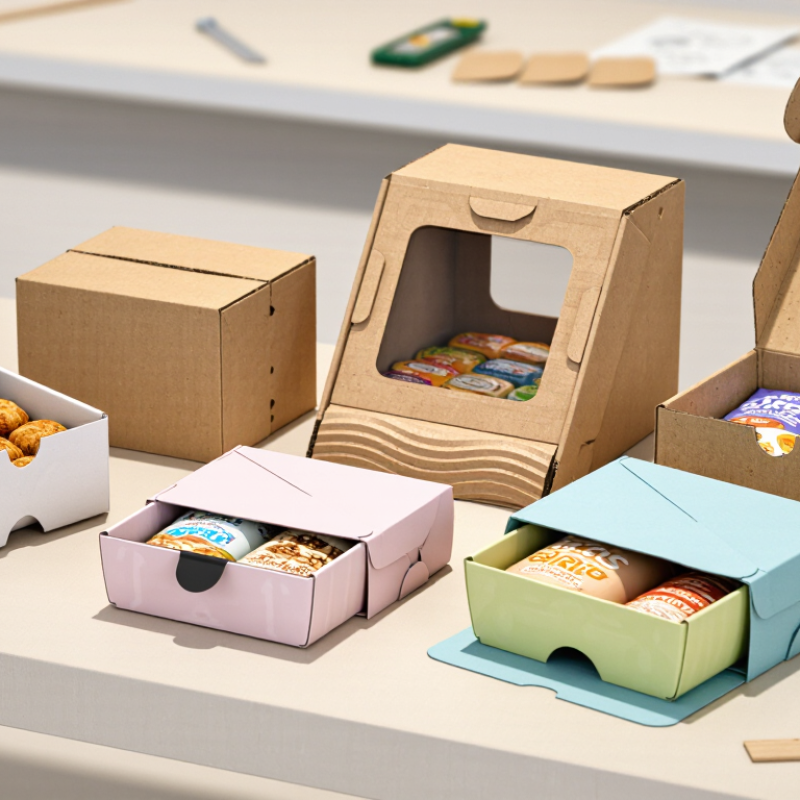
7 Best Custom Food Packaging Boxes for Global Buyers

What Makes Custom Food Packaging Boxes Suitable for Global Buyers

Custom food packaging boxes suit global buyers because they can adapt to different markets without losing product identity. A box can carry multilingual instructions, clear allergen information, recycling symbols, and country-specific details. Its structure can also protect dry foods, frozen products, or fragile baked goods during long-distance transport.

According to Smithers’ 2024 packaging market analysis, the global packaging industry is expected to exceed 1.2 trillion dollars by 2028. That scale increases demand for packaging that performs consistently across climates and supply chains. Custom boxes can use stronger board grades, tighter locking designs, and moisture-resistant coatings where needed. Small details matter. A reinforced corner may prevent crushed cartons after several handling stages.

Sustainability also influences purchasing decisions. The United Nations Environment Programme reports that packaging represents roughly 40 percent of global plastic use. This encourages buyers to reduce unnecessary layers and select recyclable paper structures. However, customization is not automatically sustainable. Excessive inks, mixed materials, and oversized boxes can weaken the environmental case. Packaging teams should test compression strength, food-contact safety, print durability, and local disposal options before ordering large quantities. A design that works in one country may fail in another. Careful sampling remains essential.

Seven Leading Types of Custom Food Packaging Boxes

Seven Leading Types of Custom Food Packaging Boxes

Global buyers are choosing boxes for protection, presentation, and measurable efficiency. Grand View Research valued the global food packaging market at about USD 562 billion in 2023. Custom packaging now includes corrugated shipping boxes, folding cartons, kraft takeaway boxes, window boxes, compartment boxes, insulated boxes, and gift boxes. Each format serves a different moment. Corrugated boxes cushion jars during export. Folding cartons fit dry foods neatly. Window boxes display pastries clearly. Compartment boxes separate meals and reduce spills. Insulated boxes help protect temperature-sensitive items, but they may require complex materials. Gift boxes create a stronger unboxing experience. Simple details matter.

Packaging can also support food-loss prevention. The UNEP Food Waste Index 2024 reports that over one billion tonnes of food were wasted in 2022. Boxes cannot solve this alone. However, accurate sizing, secure closures, and moisture control can reduce avoidable damage. Custom designs should match product weight, stacking pressure, humidity, and transport distance. A beautiful box that collapses in a container is still a failed design. I have seen buyers overvalue printing and undervalue compression testing. That mistake deserves review.

Tips: Request food-contact documentation, compression results, and migration testing before approval. Check whether coatings, windows, and adhesives fit the destination market. Use recyclable structures where practical, but verify local recovery systems. Ask suppliers for a packaging specification sheet, sample batch, and realistic production tolerance. Small errors become expensive at global volume. Cite: Grand View Research, Food Packaging Market Report, 2024; UNEP, Food Waste Index Report 2024.

7 Best Custom Food Packaging Boxes for Global Buyers - Seven Leading Types of Custom Food Packaging Boxes
Packaging Type Common Food Applications Typical Material Structure Protection Profile Customization Options Recycling Considerations Global Buyer Suitability
Folding Carton Boxes Cereal, confectionery, tea, dry snacks, frozen food and small grocery products. Paperboard, commonly made from virgin or recycled fibers; food-contact coating may be added when required. Good for stacking, dust protection and printed presentation. Limited resistance to high moisture unless coated. Custom sizes, die-cut shapes, tuck flaps, inserts, window panels and offset or digital printing. Generally recyclable when free from food residue and when plastic film, foil or complex coatings are minimized. Highly suitable for retail shelves because it is lightweight, flat-packed and efficient to ship.
Corrugated Shipping Boxes Online grocery orders, beverage multipacks, bulk food, subscription boxes and export cartons. Corrugated fiberboard with a fluted middle layer between paper liners; single-wall and double-wall grades are common. Strong compression and cushioning performance. Double-wall board offers higher stacking and transport protection. Custom dimensions, internal dividers, handles, die-cut inserts, shipping labels and flexographic printing. Widely recyclable through established paper-recycling systems when clean and dry. Excellent for international logistics because of its low weight, flat storage and scalable size range.
Rigid Setup Boxes Premium chocolates, gift foods, specialty tea, confectionery assortments and seasonal food sets. Thick paperboard wrapped with printed paper, sometimes combined with an internal tray or food-safe insert. High crush resistance and strong presentation value. Not normally intended for direct contact with unpackaged food. Magnetic lids, lift-off lids, drawers, ribbons, foam-free inserts, embossing and premium surface finishes. Recyclability depends on the use of laminates, magnets, ribbons and mixed-material components. Best for premium positioning, gifting and products where appearance is as important as transport protection.
Paperboard Sleeves and Tray Boxes Ready meals, bakery items, snack trays, prepared foods and multipacks requiring product visibility. Printed paperboard sleeve combined with a paperboard, molded-fiber or coated food tray. Provides branding, grouping and light product protection. The tray material determines heat and moisture performance. Wraparound sleeves, locking tabs, tear strips, viewing windows, barcode areas and custom tray dimensions. Fiber-based components are usually recyclable if they are clean and not permanently bonded to incompatible materials. Suitable for retail and food-service formats where fast opening, portion organization and shelf visibility matter.
Kraft Takeaway Boxes Prepared meals, noodles, fried foods, bakery products, salads and street-food portions. Kraft paperboard or corrugated kraft board; grease-resistant or moisture-resistant coatings may be used. Good for short-term carrying and portion handling. Heat, steam and oil resistance depend on the coating and board grade. Locking tabs, ventilation holes, handles, grease-resistant interiors, custom printing and portion-specific sizing. Uncoated fiber is easier to recycle; plastic, wax or aluminum-based barriers may reduce recyclability. Practical for restaurants and delivery operations, especially when compact flat-packed storage is required.
Window Food Boxes Cookies, pastries, cupcakes, confectionery, dried fruit, gift snacks and bakery assortments. Paperboard or kraft board with a transparent viewing panel made from cellulose film or plastic film. Protects products from handling and dust while allowing visual inspection. Moisture protection depends on the barrier materials. Custom window shape, tuck-top closure, inserts, dividers, ventilation, printed graphics and hanging tabs. Paperboard is recyclable; the window may need to be removed or may affect local recycling acceptance. Strong choice for products sold through retail, bakery counters and gift channels where visibility supports purchase decisions.
Insulated Food Shipping Boxes Frozen food, chilled meal kits, seafood, dairy products and temperature-sensitive food shipments. Corrugated outer box combined with molded fiber, paper-based insulation or another qualified insulating liner. Helps slow temperature change during transit. Performance depends on insulation thickness, refrigerant and shipping duration. Custom internal fit, dividers, leak-resistant liners, cold-chain labels, tamper features and temperature-monitoring areas. Paper-based systems can simplify recycling; mixed insulation, liners and refrigerants require separate handling. Suitable for domestic and international cold-chain logistics when validated through temperature and transit testing.

How to Compare Materials, Designs, and Functional Features

When comparing custom food packaging boxes, start with the food itself. Dry snacks may suit kraft paperboard, while oily or moist products need stronger barriers. Corrugated board offers useful protection during long-distance shipping. Recycled content can support sustainability goals, but its strength and surface quality must be checked carefully. A beautiful material is not always a practical one.

Design affects both shelf appeal and packing efficiency. Review box dimensions, folding structure, printing quality, and stacking performance. A window can display the product, but it may reduce moisture protection. Handles improve portability, yet they can increase material use. Ask for physical samples before approving a large order. Digital images can hide weak folds, uneven colors, or poor fitting. We have seen attractive prototypes fail during compression testing.

Tips: Compare several samples under realistic conditions. Test them with the actual product, including oil, heat, and refrigeration when relevant. Check whether the box opens smoothly and closes securely. Confirm food-contact suitability, ink safety, recycling information, and shipping requirements for each target market. Functional details matter too, such as tamper-evident closures, inner dividers, ventilation holes, and flat-pack storage. Do not judge sustainability from a single label. Measure total material use, transport volume, and disposal options. Some designs look greener but create more waste after production.

Packaging Standards, Sustainability, and International Shipping Needs

Global buyers need more than attractive food packaging. They need dependable formats for different products and shipping routes. The seven strongest options include corrugated mailers, folding cartons, tuck-end boxes, die-cut produce boxes, insulated shippers, rigid gift boxes, and export-grade corrugated cases. Each format should match product weight, moisture, temperature, and handling risks.

Packaging standards require careful documentation. Food-contact materials need migration testing, ink controls, and supplier declarations for each destination market. Corrugated boxes should be tested for compression, vibration, and drop resistance under recognized transport protocols, such as ISTA procedures. For wooden pallets or crates, ISPM 15 treatment may apply. Requirements differ across countries. One global template rarely works well.

Sustainability also needs practical evidence. The OECD’s Global Plastics Outlook reports that packaging created about 40% of global plastic waste in 2019. UNEP’s 2023 Turning off the Tap report says systemic changes could cut plastic pollution by 80% by 2040. These findings support recyclable fiber, water-based coatings, and right-sized designs. However, lighter is not always better. A thin box that fails beside a cold truck creates food waste and replacement emissions. A useful trial should measure board strength, recycled content, moisture resistance, cubic volume, and damage rates. This trade-off deserves testing. Suppliers should provide batch records, laboratory results, and shipping samples before international production.

How to Select the Best Custom Box for Your Food Product

Selecting a custom food box starts with the product, not the artwork.
A dry snack may suit a folding carton, while heavier goods need corrugated strength. For premium gifting, a rigid box offers structure, but it increases shipping weight. A tuck-end box supports efficient packing and shelf display. A window can show the product clearly. It can also weaken protection.

Check the food’s weight, moisture, oil content, and expected shelf life. Greasy products need suitable inner barriers or coatings. Products facing long-distance transport need compression strength and reliable closure. Ask the packaging supplier for food-contact documentation, material specifications, and current test reports for each destination market. Ink placement matters too. Keep printing away from direct food contact unless the material is approved for it.

Practical sampling often reveals problems that drawings miss. Test the box with the real product, not an empty mock-up. Drop it, stack it, chill it, and open it with wet hands. A box that looks excellent may tear near the locking tab.

We sometimes overvalue appearance. This is worth reconsidering. Compare the seven common options by protection, packing speed, storage space, and shipping cost. Also check whether the box can be recycled through the target market’s normal system. Small details matter: readable handling marks, stable dimensions, and a closure that stays shut during movement.

FAQS

Why are custom food packaging boxes useful for global buyers?

They can carry multiple languages, allergen details, recycling symbols, and market-specific information. They also protect food across long shipping routes. Climate changes matter.

How should buyers choose packaging material?

Start with the food, not the artwork. Dry snacks may fit paperboard, while oily foods need stronger barriers. Heavier products often require corrugated board. A beautiful material may fail in practice.

What box features improve protection during transport?

Reinforced corners, strong board, secure locks, and compression-resistant structures help. Reliable closures prevent boxes from opening during movement. Test stacking and drops with the filled product.

Are recyclable materials always the most sustainable choice?

No. Recyclable paper can still use excess material, ink, or coatings. Oversized boxes may increase transport volume and waste. Check local recycling systems. Labels can mislead.

How can buyers test a custom food box before ordering?

Use the actual product, including its weight and moisture. Drop the box, stack it, chill it, and open it with wet hands. Inspect folds, corners, and locking tabs. Digital images are not enough.

Which packaging designs suit different food products?

Folding cartons suit many dry foods and support efficient packing. Tuck-end boxes save storage space and display neatly. Rigid boxes provide premium structure but add shipping weight. Windows improve visibility but may weaken moisture protection.

What safety information should global buyers request?

Request food-contact documents, material specifications, and current test reports. Confirm ink placement and coating suitability. Keep unapproved printing away from direct food contact. Requirements vary by destination.

What small details should buyers inspect before approval?

Check readable handling marks, stable dimensions, and smooth opening. Review inner dividers, ventilation holes, tamper-evident closures, and flat-pack storage. Test whether the box stays closed during movement. Small details matter.

How should buyers balance appearance, cost, and performance?

Compare protection, packing speed, storage space, material use, and shipping cost. A premium appearance cannot compensate for crushed corners or poor closure. We sometimes overvalue appearance. That deserves reconsideration.

Conclusion

Custom Food Packaging Boxes are designed to meet the diverse needs of food producers, retailers, and distributors serving global markets. This overview introduces seven practical box types, including folding cartons, rigid boxes, window boxes, sleeve boxes, kraft boxes, compartment boxes, and insulated options. Each type can be adapted to different food categories, product sizes, presentation goals, and protection requirements. By considering materials, structural design, printing quality, closures, inserts, and moisture or temperature resistance, businesses can create packaging that is both attractive and functional.

The article also explains how to compare packaging choices according to durability, recyclability, cost, branding flexibility, and ease of storage. Sustainability is addressed through responsible material selection, reduced excess packaging, and designs that support efficient international shipping. Attention is also given to packaging standards, labeling space, product protection, and transportation conditions. By matching the box style and features with the food product, target market, budget, and distribution method, global buyers can select packaging that improves presentation, safety, and overall customer experience.


Olivia

Olivia

Olivia is a professional marketing specialist dedicated to helping businesses understand how thoughtful products and practical solutions can create measurable value. With extensive knowledge of the company’s offerings, she regularly researches industry trends, customer needs, and emerging......