Discover latest tips, box design trends, eco-friendly strategies, and expert advice to elevate your brand packaging.
Custom French Fry Boxes are more than containers for hot, crisp fries. They shape how customers carry, see, and remember a meal. A sturdy box can help keep fries together during a busy lunch rush, while a wide opening makes them easier to share. Clear branding also gives customers a quick visual reminder of your business, whether they are eating at a counter or walking down the street.
The right design starts with practical details. Consider the portion size, the way staff fill the box, and how long fries may sit before serving. A box that looks attractive but traps steam can leave fries soft. Small vents, suitable food-grade board, and a comfortable grip may improve the experience, though results depend on the fries and service conditions. Packaging is not a cure-all. That matters.
For an illustrative expert voice—not a verified quotation from a real person—packaging consultant Elena Brooks might put it this way: “Good fry packaging should protect the food, support the brand, and work smoothly in a real service rush.” That is a useful test for any design. Ask staff to fill and carry a sample box. Check whether it stays open, feels secure, and fits your serving routine. Then listen to customer feedback. A custom box can strengthen a memorable meal, but only when its appearance and function work together.
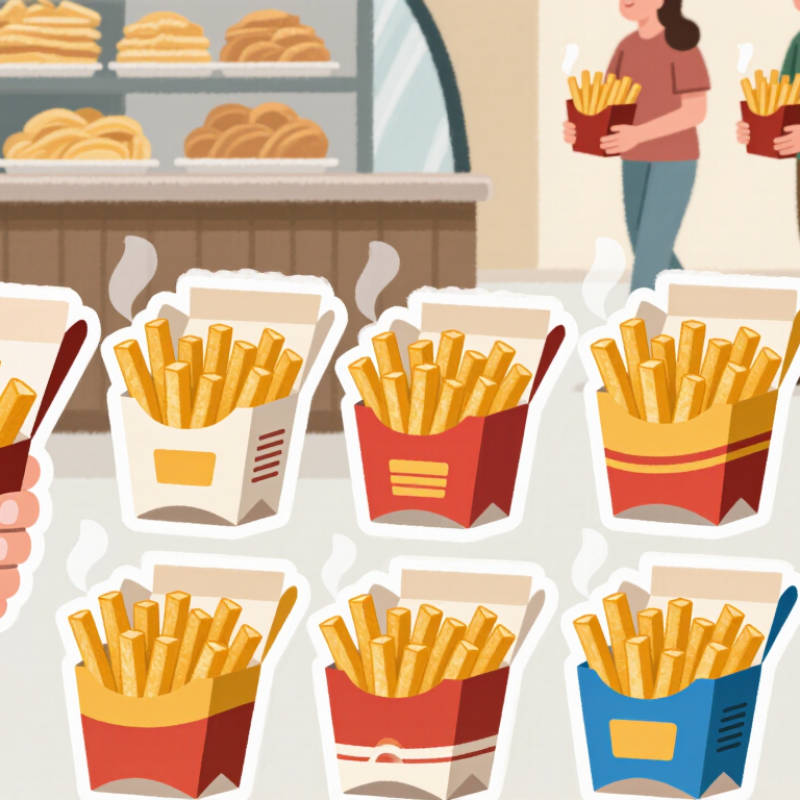
French fry boxes are compact containers designed to hold fries during preparation, pickup, and eating. Common formats include open-top cartons, scoop-style trays, and foldable boxes with lids. Each offers a different balance of visibility, hand access, and spill protection. Open tops make serving quick, while lids can help during takeaway.
Quick-service kitchens need packaging that is easy to fill and comfortable to carry. A box should fit a realistic portion without crushing the fries or leaving excessive empty space. Fit matters. Oversized cartons can let fries slide around; tight ones may trap steam and soften crisp edges. Small vent openings can release some moisture, though too much airflow may cool food faster. The right balance depends on portion size, travel time, and how the fries are served.
Custom sizing and print areas can make boxes easier to identify at the counter and more consistent with a menu presentation. But customization is not automatically an improvement. Extra coatings or complex folds may add cost and slow packing. Test it warm. Fill sample boxes during a busy service, then check how easily staff can load them and whether fries stay intact after a short trip. These practical checks reveal packaging problems that a flat sample cannot.
| Box Format | Typical Use | Common Material | Packaging Advantage | Quick-Service Consideration | Customization Options |
|---|---|---|---|---|---|
| Open-Top Scoop | Single portions served at counters, food trucks, and events | Food-contact paperboard or kraft paperboard | Allows easy access and convenient holding while eating | Open sides provide limited protection from spills and do not retain heat as well as closed formats | Printed exterior, portion-specific sizes, and optional grease-resistant treatment |
| Straight-Wall Carton | Regular or larger fry servings for takeaway and counter service | Folded paperboard, often with a food-contact barrier | Upright shape helps contain the serving and presents fries clearly | Choose a size that holds the intended portion without tightly compressing the fries | Carton height, opening width, print design, and paperboard grade |
| Vented Carton | Takeaway orders where fries may spend time in a bag or delivery container | Food-grade paperboard with designed ventilation openings | Vents can let some steam escape, helping limit trapped moisture | Vent placement and opening size affect airflow; the package cannot prevent fries from softening over time | Vent pattern, carton dimensions, printed graphics, and grease-resistant finish |
| Paper Pouch | Small portions, quick snacks, and orders intended for immediate consumption | Food-grade paper | Lightweight, compact, and easy to hand to customers | Offers less structure than a carton and may be less suitable for larger portions or longer transport | Pouch width and height, paper type, and printed exterior |
| Closed Folding Carton | Combo meals and orders packed with other takeaway items | Folded paperboard with a food-contact surface or barrier | Enclosed design helps contain the serving during handling | Closures should be easy to assemble during busy service and should not trap excessive steam | Closure style, carton dimensions, print coverage, and interior barrier options |
| Compartment Carton | Meals that include fries alongside a separate item or dip | Food-grade paperboard, with dividers formed into or added to the structure | Separate sections can help keep components apart in the package | Confirm the compartments suit the portion sizes and the way staff pack each order | Compartment layout, divider height, overall size, and printed design |
Selection note: Match the format to serving size, service speed, and expected time before consumption. Food-contact suitability, grease resistance, and recycling options depend on the specific material and local requirements; confirm these details with the packaging supplier and local waste facilities.
It describes U.S. paper and paperboard recycling in 2018, not fry boxes specifically. About 46 million tons were recycled. The figure has limits.
Not automatically. Board weight, folds, and ventilation all affect performance. A weak seam can soften when oily fries sit inside.
Test samples with real portions. Look for oil spots, softened seams, and trapped steam after several minutes. Small trials can miss things, but they help.
They may affect whether local facilities accept the box. Check with the intended facility before making a recycling claim. Local rules vary.
It reports surveyed consumers’ willingness to pay more. It does not guarantee they will choose a pricier meal. Price still matters.
Use specific wording that matches local collection options. A small disposal note may be clearer than a broad eco-friendly claim. Be precise.
Use readable type, a simple fry illustration, and a serving size that is easy to hold. Test the printed box before ordering in bulk. It may still need changes.
Custom French Fry Boxes are designed to serve the practical needs of quick-service restaurants, food trucks, and takeaway businesses. Available in different shapes and sizes, they make fries easy to portion, carry, and enjoy on the go. A well-designed box balances ventilation and heat retention: small openings can help release steam and preserve crispness, while grease-resistant materials help prevent leaks and keep the packaging comfortable to handle.
Material selection and construction matter, too. Paperboard components intended for food contact should meet applicable safety requirements, including relevant standards for paper and paperboard used with food. Paper-based packaging can also support recycling efforts; a 2018 report recorded a 68.2% recycling rate for paper and paperboard. Custom printing gives businesses space to communicate their identity and packaging choices, while research has found that 82% of consumers are willing to pay more for sustainable packaging. Combining function, compliance, and thoughtful design can make fry packaging a useful part of the customer experience.