Engineered for maximum aroma retention, extended roast shelf life, and high-impact retail presentation. Fully customizable across size, barrier material, and functional closures.
The global coffee packaging landscape is undergoing a structural paradigm shift driven by technological innovations in material barrier properties, stringent environmental regulations, and evolving consumer preferences for specialty roast preservation. China has solidified its status as the world's primary hub for flexible packaging manufacturing, boasting comprehensive industrial clusters across Guangdong, Zhejiang, and Jiangsu provinces. Chinese packaging factories leverage state-of-the-art multi-layer co-extrusion lamination, high-definition rotogravure printing, and automated degassing valve insertion technologies to deliver world-class solutions at highly competitive wholesale scales.
For international coffee roasters, private label brands, packaging distributors, and enterprise procurement officers, sourcing coffee bags from China offers unmatched supply chain scalability, material flexibility, and structural customization. However, navigating supplier capabilities requires an in-depth understanding of technical parameters such as Oxygen Transmission Rates (OTR), Water Vapor Transmission Rates (WVTR), hermetic heat-seal integrity, degassing valve mechanics, and compliance standards including US FDA 21 CFR and EU PPWR (Packaging and Packaging Waste Regulation).
Core Procurement Insight: Premium whole bean coffee releases 2 to 5 liters of carbon dioxide gas per kilogram post-roasting. Utilizing precision-engineered one-way degassing valves combined with high-barrier multi-layer substrates is vital to prevent pouch rupture while protecting delicate volatile aromatic compounds (terpenes, pyrazines, and esters) from oxidative degradation.
Top Chinese manufacturers have transitioned from low-cost mass production to high-tech, precision packaging engineering. When evaluating potential suppliers, global procurement teams must inspect five core operational competencies:
Leading factories utilize 3-ply to 5-ply composite structures combining PET for structural stiffness, aluminum foil (AL) or metallized PET (VMPET) for light barrier protection, nylon (NY) for flex-crack resistance, and linear low-density polyethylene (LLDPE) for low-temperature hermetic sealing.
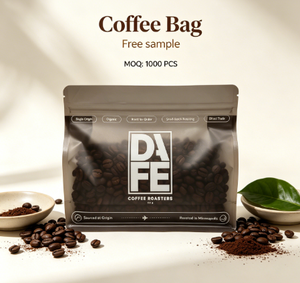
Valves sourced from Wipf or custom-manufactured internal ultrasonic valve application machinery ensure continuous release of internal gas while stopping atmospheric oxygen and moisture ingress, preventing premature staling and pouch swelling during long-distance maritime transit.
Chinese facilities feature electronic gravure cylinder engraving capable of 10-color process printing with register accuracy of ±0.1mm. Technologies include registered matte/gloss finishes, tactile soft-touch coatings, metallic foil stamping, and short-run HP Indigo digital printing for micro-lot seasonal roasts.
The global coffee sector is transitioning away from conventional non-recyclable multi-material packaging toward sustainable, high-functionality alternatives. Understanding these emerging trends allows procurement teams to future-proof their supply chains.
Driven by European Union regulations, traditional tri-laminates containing aluminum foil are being replaced by monomaterial Polyethylene (PE/PE) and Polypropylene (PP/PP) structures enhanced with ultra-thin EVOH or barrier coatings. These deliver sub-1.0 OTR values while fitting cleanly into existing curbside recycling streams.
Emerging bio-pack innovations leverage Kraft paper combined with PLA (Polylactic Acid) or Bio-PBS film linings. When fitted with certified compostable degassing valves and zippers, these packaging structures disintegrate into non-toxic organic matter under standard industrial composting parameters (EN 13432 compliant).
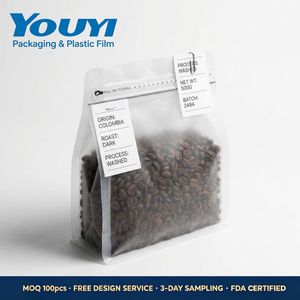
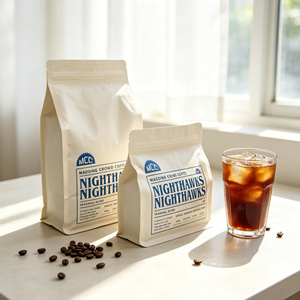
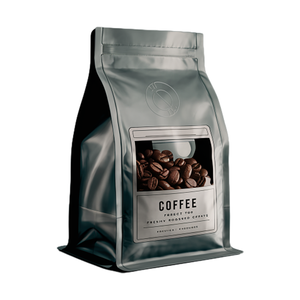
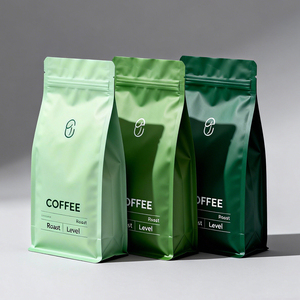
The flat-bottom box pouch (quad-seal stand-up pouch with side gussets) is rapidly superseding standard pillow pouches and traditional 3-side seal bags. Offering five distinct printable panels, flat-bottom pouches provide superior shelf stability, optimized palletization volume, and maximum retail visual presence.
Roasters are increasingly embedding dynamic variable QR codes onto coffee bags during the converting process. This allows consumers to trace bean origins, farm elevation, cupping scores, and roast dates, bridging physical packaging with digital brand storytelling.
Ensuring long-term product integrity requires strict verification of material physical properties before approving mass gravure production runs. Below is the standard inspection framework utilized by leading Chinese suppliers:
| Testing Parameter | Standard Test Method | High Barrier Foil (Aluminum) | Recyclable Monomaterial (PE/EVOH) |
|---|---|---|---|
| Oxygen Transmission (OTR) | ASTM D3985 | < 0.05 cc/m²/24hr | < 0.8 cc/m²/24hr |
| Water Vapor Transmission (WVTR) | ASTM F1249 | < 0.05 g/m²/24hr | < 1.0 g/m²/24hr |
| Heat Seal Strength | ASTM F88 | ≥ 35 N/15mm | ≥ 28 N/15mm |
| Puncture Resistance | ASTM F1306 | High (> 25 N) | Very High (> 35 N - Elastic) |
| Recyclability Rating | ISO 15270 / EU Directive | Landfill / Hard to Recycle | Code 4 (LDPE) Recyclable |
Technical, logistical, and commercial answers for coffee roasters and buyers sourcing packaging from China.
Freshly roasted whole bean coffee undergoes an intense off-gassing process, releasing up to 5 liters of carbon dioxide gas per kilogram of coffee over several weeks. If sealed in a completely airtight pouch without venting, the accumulated gas will cause the pouch to bloat and potentially burst. A one-way degassing valve acts as a mechanical check valve: internal pressure opens a rubber diaphragm to vent CO2 outward, but external atmospheric oxygen, humidity, and odors are blocked from entering. This preserves essential aromatic oils and prevents oxidation.
Traditional high-barrier coffee packaging uses multi-material laminates such as Matte PET / Aluminum Foil / Polyethylene. While offering near-zero OTR and WVTR, the metallic foil layer makes these pouches unrecyclable in standard municipal plastic streams. Monomaterial packaging replaces multi-layer metal laminates with single-family polymers (such as High-Density PE combined with Low-Density PE, plus an ultra-thin barrier layer of EVOH under 5% total weight). This monomaterial design achieves identical barrier shelf-life while qualifying for Code 4 PE recycling streams globally.
MOQ for custom printed coffee pouches is primarily governed by the film extrusion and printing press setup requirements rather than bag assembly. For conventional rotogravure printing, raw film run lengths typically require a minimum of 5,000 to 10,000 meters of material per SKU, which translates to roughly 10,000 to 20,000 pouches depending on dimensions (e.g., 250g vs 1kg bags). For smaller roasters requiring multi-SKU short runs, suppliers utilize digital press lines (such as HP Indigo 20000), allowing MOQs as low as 500 to 1,000 pieces per SKU without cylinder engraving fees.
Reputable Chinese packaging factories utilize automated seal integrity and burst pressure testing (ASTM F1140). Samples from each production run undergo vacuum chamber bubble leak testing (ASTM D3078) to verify that heat seals, degassing valve perimeters, and zipper tracks hold up under negative pressure conditions experienced during high-altitude air freight or maritime transport. Heat seal jaws are calibrated for temperature, pressure, and dwell time, ensuring seal strengths exceed 30 N/15mm.
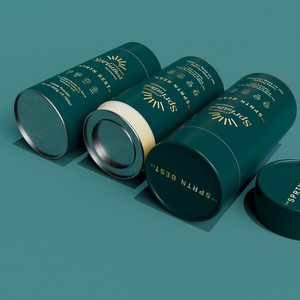
Yes. While raw Kraft paper is porous, rigid paper tube containers engineered for coffee utilize an internal composite foil liner (such as aluminum foil or metallized PET laminated to PE). The top and bottom are hermetically sealed with tinplate metal caps, removable aluminum easy-open peelable lids, or food-grade rubber plugs. This structure combines an organic, eco-friendly exterior aesthetic with the extreme gas barrier required to keep roast profiles intact for 12 to 24 months.
A standard OEM production cycle follows a predictable timeline: Artwork pre-press proofing and 3D digital rendering approval (3–5 business days); gravure cylinder engraving (5–7 days); film printing, lamination, curing, and pouch converting (10–14 days). Total factory production typically spans 18 to 25 days. Maritime freight shipping takes an additional 15 to 35 days depending on the destination port (US West Coast ~15 days, Europe ~28 days), while air express delivers within 5 to 7 days.
Child-resistant (CR) packaging incorporates a specialized dual-action press-to-open zipper mechanism that requires two distinct physical movements to disengage (such as aligning a hidden tab slot or pushing a release slider while pulling the zipper). This functional closure is increasingly requested by brands selling specialty infused coffee products, ensuring compliance with poison prevention packaging regulations (US CPSC 16 CFR 1700.20) while protecting households.
To achieve crisp vector lines and accurate spot color reproduction, factories require vector artwork files created in Adobe Illustrator (.AI, .EPS, or layered vector .PDF format). All fonts must be converted to outlines/curves, embedded images must be at 300 DPI or higher, and colors should be designated using official Pantone Matching System (PMS) solid formula codes alongside standard CMYK channels to ensure perfect color matching across print runs.
Partner directly with China's leading packaging engineers. Receive custom structural dielines, physical material sample kits, and factory-direct wholesale pricing tailored to your brand specifications.
Send an Inquiry