Certified recyclable, biodegradable, and compostable custom box solutions engineered for international export, structural resilience, and premium unboxing experiences.
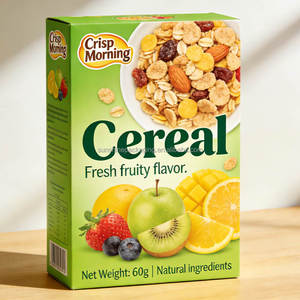 Food Safe
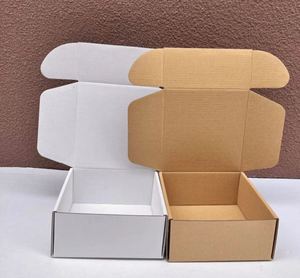 100% Recyclable
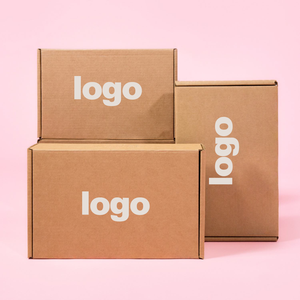 FSC Certified
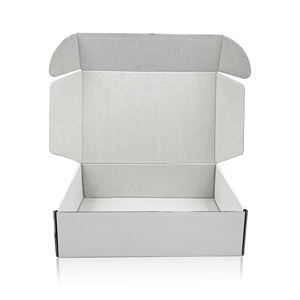 Luxury Eco-Finish
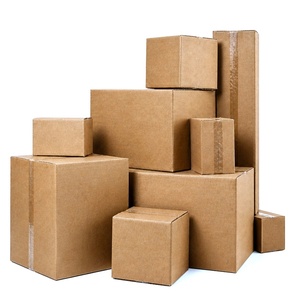 Waterproof Coating
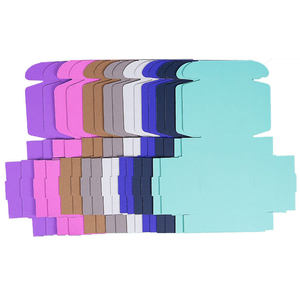 25 Standard Sizes
 Aircraft Grade Lock
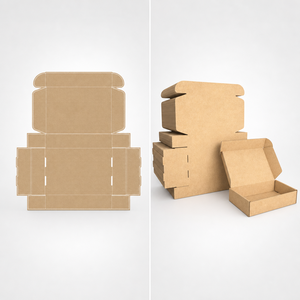 No MOQ / Ready Stock
An in-depth analysis of environmental legislation, carbon accounting, and closed-loop material transitions shaping enterprise procurement strategies worldwide.
The global eco-friendly packaging market is undergoing an unprecedented structural transition driven by stringent international regulations, such as the EU Packaging and Packaging Waste Regulation (PPWR), the US California Senate Bill 54 (SB 54), and global Extended Producer Responsibility (EPR) frameworks. Corporate procurement officers must navigate beyond surface-level sustainability slogans to implement quantifiable, verified low-carbon supply chain models.
Key indicators driving global sourcing decisions include:
Phasing out expanded polystyrene (EPS) and single-use petroleum plastics in favor of PHA/PLA barrier linings and agricultural waste fiber compositions.
Procurement compliance mandates 100% FSC (Forest Stewardship Council) certified virgin fibers or certified Post-Consumer Recycled (PCR) paperboard pulp.
Replacing non-recyclable polyethylene (PE) film laminates with water-dispersed polymer coatings that facilitate repulping in standard recycling streams.
Comparative structural breakdown of packaging substrates under industrial recycling conditions:
| Substrate Type | Recyclability | Degradation | Repulping Efficiency |
|---|---|---|---|
| Unbleached Virgin Kraft | 100% Curbside | 90-180 Days | 98.5% Yield |
| PCR Corrugated Board | 100% Curbside | 60-120 Days | 95.0% Yield |
| Aqueous-Coated Board | Repulpable | 180-240 Days | 92.0% Yield |
| Traditional PE Laminated | Landfill Only | 200+ Years | <15.0% Yield |
Advanced exporters now integrate digital passports and QR-coded carbon metrics on custom folding cartons. This enables enterprise buyers to auto-generate ESG compliance audit trails directly aligned with GHG Protocol Scope 3 standards.
How next-generation barrier coatings, micro-flute geometry, and zero-ink digital embellishments are reshaping high-volume packaging production.
Historically, food packaging requiring oil and moisture resistance relied on fluorinated chemicals (PFAS) or plastic film lamination. Emerging manufacturing standardizes on nano-cellulose fiber matrices and bio-acrylic aqueous dispersions. These offer oil-kit values above Grade 9 while maintaining total repulpability in standard municipal paper recycling facilities.
Engineering optimization has shifted production toward F-flute (0.7mm) and N-flute (0.5mm) corrugated configurations. By optimizing structural crease geometry and linerboard tensile strength, suppliers achieve the rigid protective characteristics of rigid box packaging while reducing raw material consumption by weight by 28% to 35%.
Environmental compliance strictly restricts heavy metal concentrations and volatile organic compounds (VOCs) in printing inks. Leading exporters utilize soy-based inks, algae-derived carbon pigments, and electron-beam (EB) cured coatings that eliminate hazardous solvent emissions while delivering vibrant Pantone color accuracy.
The traditional model of ordering 50,000 units to achieve pricing scale is being replaced by ultra-flexible, digital die-cutting and high-speed inkjet web printing lines. This allows B2B buyers to order exact seasonal run quantities without triggering excess inventory degradation or warehouse storage carbon overhead.
Vertical manufacturing integration, rigorous ISO quality management systems, and transparent OEM/ODM export fulfillment.
Free structural CAD dieline creation, 3D photorealistic renderings, and rapid physical prototype sampling prior to mass production runs.
Scalable production lines cater to both fast-growing D2C startups requiring small batches (100–500 pcs) and multi-national corporations ordering millions.
Standard manufacturing completion in 8 to 10 business days, complemented by expedited air freight and cost-optimized sea/rail freight shipping options.
Every lot undergoes burst strength testing, moisture barrier verification, drop testing compliance (ISTA 3A), and color delta-E checks before dispatch.
Clear, direct technical answers regarding box structural integrity, customization options, volume discounts, and international export logistics.
Our production facilities operate under FSC Chain-of-Custody certification (FSC-C123456). Furthermore, our raw kraft and paperboard substrates meet DIN EN 13432 and ASTM D6400 industrial compostability standards, while water-based inks comply with REACH, RoHS, and CONEG heavy metal toxicity regulations.
Aqueous coatings provide high resistance to grease, moisture, and scuffing while maintaining complete repulpability in standard recycling mills. Unlike polyethylene (PE) laminates which require specialized chemical separation, aqueous-coated boards disintegrate cleanly in municipal water-based pulpers.
Yes. We engineer double-wall corrugated boards (such as B-Flute + E-Flute combinations) offering Edge Crush Test (ECT) ratings from ECT-32 up to ECT-44 (or 200# to 275# burst strength). These structures safely withstand vertical stacking loads up to 45 kg during freight transit.
We provide three sampling tiers: 1) Free stock sample boxes to verify material thickness; 2) Plain structural CAD unprinted samples produced within 48 hours; and 3) Fully printed pre-production prototypes featuring exact color proofs and surface embellishments.
We utilize eco-friendly embellishments including transferrable cold foils, blind debossing, embossing, micro-embossing, organic soy spot UV, and water-soluble matte varnish. All of these processes allow the box structure to pass standard repulping assays.
We offer complete DDP (Delivered Duty Paid), FOB, and CIF terms. Our export team coordinates customs documentation, tariff classification under HS Code 4819, and door-to-door delivery directly to enterprise distribution centers in over 60 countries.
Direct food-contact boxes are produced using 100% virgin paperboards or specialized greaseproof kraft liners manufactured in ISO 22000 / BRCGS food-safety certified environments. Barrier options prevent mineral oil hydrocarbons (MOSH/MOAH) migration into consumable goods.
Because automated die-cutting and flexographic print setup costs are amortized over production runs, unit prices drop significantly at scale. For example, moving from a 500-unit tier to a 5,000-unit tier typically reduces per-unit costs by 50% to 65%.
Yes. We offer dual-sided (inside and outside) printing in full CMYK Pantone matching. Interior printing allows brands to embed unboxing instructions, environmental messaging, or brand storytelling without additional external retail space.
We accept vector artwork files in Adobe Illustrator (.AI), PDF, or EPS format with outline-converted fonts and embedded high-resolution CMYK color channels. Our in-house design engineering team will inspect and adjust dielines free of charge.
Connect directly with our senior packaging engineers for custom dieline support, instant wholesale price quotations, and rapid sample prototyping with zero minimum order obligations.