Executive Technical Insight
Navigating CE Certification & Japanese Food Sanitation Standards for Osaka Importers
For food manufacturers, confectioners, and packaging distributors operating in the Greater Osaka Area (Kansai Region), sourcing custom packaging requires a precise alignment between European CE compliance and Japan’s Ministry of Health, Labour and Welfare (MHLW) regulatory framework.
CE & EU Regulation 10/2011 Compliance
Our packaging matrices strictly adhere to EC 1935/2004 and EU Regulation No. 10/2011 on plastic materials and articles intended to come into contact with food. By executing rigorous Overall Migration Testing (OMT) in acetic acid, ethanol, and vegetable oil food simulants, we guarantee that chemical substances do not migrate into food products above the statutory limit of 10 mg/dm².
Japanese Food Sanitation Act (MHLW No. 370)
Importing custom food boxes into Osaka requires strict compliance with the Japanese Food Sanitation Act (Shokuhin Eisei Hō). Our production lines utilize paperboard formulations tested against Notification No. 370 standards, eliminating heavy metal contamination (Lead, Cadmium) and phthalate plasticizers to pass Tokyo and Osaka Customs inspections without delay.
Technical Regulatory Compliance Matrix
Comparing international export standards provided for Osaka food distributors:
| Compliance Parameter |
CE / EU Food Standard |
MHLW Japan (No. 370) |
Our Enterprise Guarantee |
| Heavy Metals (Pb, Cd, Hg, Cr6+) |
< 100 ppm total (94/62/EC) |
Strict Non-Detect Limits |
✓ Pass (< 5 ppm) |
| PFAS Fluorinated Compounds |
REACH Annex XVII Restricted |
Voluntary Industry Phase-out |
✓ 100% PFAS-Free Aqueous |
| Overall Migration Limit (OMT) |
< 10 mg/dm² |
< 30 ppm Residue |
✓ Certified < 2.5 mg/dm² |
| Printing Ink Formulation |
EuPIA Low Migration List |
Positive List System (2020) |
✓ Vegetable Soy Inks |
Localized Application Scenarios
Tailored Packaging Engineering for Osaka's Diverse Culinary Sectors
Known historically as "Tenka no Kitchen" (The Nation's Kitchen), Osaka demands specialized food packaging solutions that preserve culinary freshness while delivering exceptional visual appeal for department stores (*Depachika*) and street-food operations.
Depachika Gift & Wagashi Retail
Umeda & Namba Luxury Department Stores
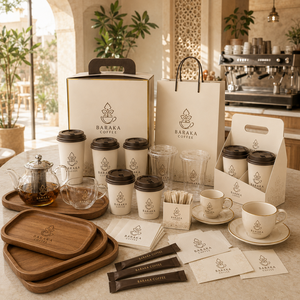
Premium rigid gift boxes and folding cartons designed for Japanese gift-giving customs (*Omiyage* and *Seibo*). Featuring precision soft-touch lamination, hot foil stamping, and odor-free SBS virgin paperboard to protect delicate matcha green tea snacks, cookies, and traditional Japanese sweets without aroma transfer.
Hot Food & Takeaway Service
Dotonbori & Food Service Venues
High-temperature greaseproof paper containers optimized for Osaka street food favorites like takoyaki, okonomiyaki, and gyoza. Engineered with bio-based water dispersion coatings that withstand +90°C hot oil without softening, structural collapse, or outer carton grease bleeding.
Cold-Chain Bento & Fresh Seafood
Kansai Express Freight & Supermarkets
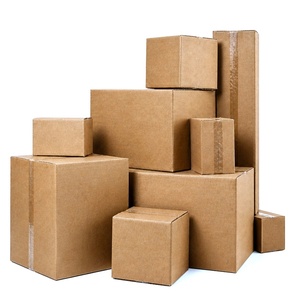
High Cobb60 moisture-resistant corrugated shipping boxes engineered for refrigerated and frozen bento logistics. Built with micro-flute corrugated walls (E-flute and F-flute) that maintain compressive strength down to -40°C deep freeze environments during Kansai regional delivery.
Material Engineering & Innovation
Aqueous Barrier Coatings Replacing Single-Use Plastics in Kansai
Ahead of global environmental initiatives and local sustainability mandates in Osaka City, traditional polyethylene (PE) and wax laminations are being replaced by high-performance recyclable alternatives.
Advanced Water-Based Dispersion Barriers
Our custom food packaging boxes utilize bio-based aqueous coatings applied via roller application during paper production. This technology forms a continuous hydrophobic barrier across the paperboard substrate, achieving exceptional water vapor transmission rates (WVTR) and Cobb 30 values under 15 g/m².
Unlike PE-coated cartons that require specialized industrial stripping, our aqueous-coated boxes can be directly repulped in standard paper recycling streams across Japan, aligning perfectly with Osaka's strict municipal waste management frameworks.
PFAS-Free Grease Resistance (KIT Level 9–12)
Per- and polyfluoroalkyl substances (PFAS) have historically been used for grease resistance but face increasing restrictions worldwide. We engineer non-fluorinated paperboard substrates using cross-linked natural starches and plant-derived cellulose nanofibers.
These sustainable substrates achieve a standard TAPPI T 559 KIT test score of 10+, ensuring complete barrier protection against vegetable oils, butter, and animal fats without harmful synthetic chemistry.
FSC Certified Virgin Paperboard Options
We offer 100% FSC-certified solid bleached sulfate (SBS), folding boxboard (FBB), and natural unbleached kraft substrates. All raw pulps are derived from responsibly managed forests, providing complete supply chain traceability for audits by international brand owners and Japanese food conglomerates.
Supply Chain Excellence
Streamlined Custom Manufacturing & Logistics to Osaka Ports
As a direct manufacturer and exporter, we eliminate middleman overhead while providing end-to-end quality assurance from structural CAD prototyping to final destination delivery.
Heidelberg Offset Printing
Equipped with Speedmaster XL 6-color offset presses featuring inline spectrophotometry for automatic color calibration. We maintain Delta-E color accuracy under 1.5, matching exact Pantone brand guidelines for Japanese retail packaging.
Direct Freight to Osaka Ports
Positioned along major East Asian shipping lanes, we offer direct ocean freight to Osaka Nanko Port (3–5 days transit) and express air freight to Kansai International Airport (KIX) for time-critical seasonal campaign packaging.
Scalable Tiered Production
Whether you require low-volume prototype runs (no minimum order quantity option) for market testing in Shinsaibashi pop-up shops, or multi-container enterprise orders for national distribution, our scalable machinery accommodates all order scales seamlessly.
Buyer Procurement Guide
Frequently Asked Questions for Osaka Food Packaging Procurement
Key technical considerations, import compliance details, and logistics policies answered for Osaka business buyers.
Q:
How do you guarantee that your food packaging boxes meet Japanese Food Sanitation Law standards?
We perform third-party testing (SGS/TÜV) in strict accordance with MHLW Notification No. 370. Test documentation verifying zero heavy metal migration, non-detectable phthalate plasticizers, and low-migration soy ink compliance is included with every batch shipment for customs clearance in Osaka.
Q:
What are the lead times for shipping custom printed boxes to Osaka, Japan?
Standard manufacturing takes 8–10 business days following digital structural proof approval. Ocean freight directly to Osaka Port (Nanko) takes approximately 3–5 shipping days. Expedited air cargo via Kansai International Airport (KIX) delivers within 48–72 hours after production completion.
Q:
Can you produce eco-friendly greaseproof packaging for hot foods like Takoyaki or Fried Chicken?
Yes. We manufacture oil-resistant boxes using bio-based aqueous coating technology and PFAS-free greaseproof paperboard certified up to KIT Level 12. These boxes resist thermal degradation up to +100°C without leaching plastic odors or grease into the food product.
Q:
Is there a minimum order quantity (MOQ) for custom logo printing?
We offer flexible production tiers with a low/no MOQ starter program for small businesses and regional Osaka bakeries, up to automated high-speed runs for multi-million unit orders with volume tier pricing discounts.
Q:
Do you provide Japanese language typesetting and artwork proofing support?
Yes, our prepress engineering team reviews vectorized Japanese typography (Kanji, Hiragana, Katakana), barcode scanability (JAN/EAN-13 codes), and structural die-lines to prevent printing errors before plate manufacturing.
Q:
Are physical structural samples available prior to mass production?
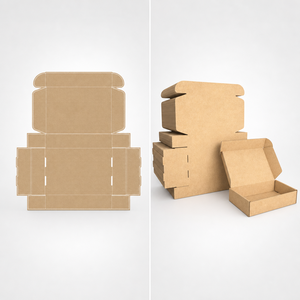
We provide unprinted CAD structural samples within 48 hours for sizing and food item fit testing. Pre-production printed samples using your exact substrate and finishing options can also be dispatched via express courier.